
Ageing is a natural process, but the way it presents on your face can vary significantly from person to person. Some individuals may notice a gradual loss of firmness and facial definition, while others develop hollow areas, fine lines, or changes in skin texture earlier.
With the wide range of aesthetic treatments available today, it is common to feel uncertain about which option may be suitable. Without understanding the underlying causes of facial ageing, choosing the right treatment can be challenging. If you are considering anti-ageing treatments, a personalised consultation can help define a tailored plan based on your individual needs.
Continue reading to discover your facial ageing type and explore which treatments may be suitable for you at elixir clinic Singapore!
Table Of Contents
- What Causes Facial Ageing?
- Types of Facial Ageing
- Treatments for Sagging Skin and Loss of Firmness
- Treatments for Volume Loss & Hollow Areas
- Treatments for Fine Lines, Wrinkles, and Skin Texture
- Which Treatments are Suitable for Your Face Ageing Type?
What Causes Facial Ageing?
Facial ageing is a gradual process influenced by a combination of structural, biological, and environmental factors. Over time, the deeper layers of the face begin to change. Facial fat pads may shrink, shift, or descend, while underlying bone support can subtly reduce. At the same time, the ligaments that help hold facial tissues in place become less firm. These structural changes contribute to common concerns such as sagging skin, loss of definition, and hollow areas.
Facial ageing occurs across multiple layers, from deep structural support to surface-level skin quality. An effective approach often involves addressing these changes in a personalised and comprehensive way. At the skin level, natural ageing leads to a decline in collagen and elastin, which are essential for maintaining firmness and elasticity. The skin also produces less hyaluronic acid, resulting in reduced hydration. As a result, the skin may appear thinner, less resilient, and more prone to fine lines, wrinkles, and dullness.
External factors can further accelerate these changes. Prolonged sun exposure is one of the main contributors to premature ageing, as it breaks down collagen and affects skin quality. Environmental pollutants can increase oxidative stress, while lifestyle habits such as smoking and insufficient sleep may impair the skin’s natural repair processes.
Types of Facial Ageing
Facial ageing can generally be grouped into three main types based on how changes appear in the face—sagging, volume loss, and wrinkles. Understanding which category you relate to most can help guide a more targeted and effective treatment approach, as each type involves different underlying causes and concerns.
Sagging Skin & Loss of Firmness
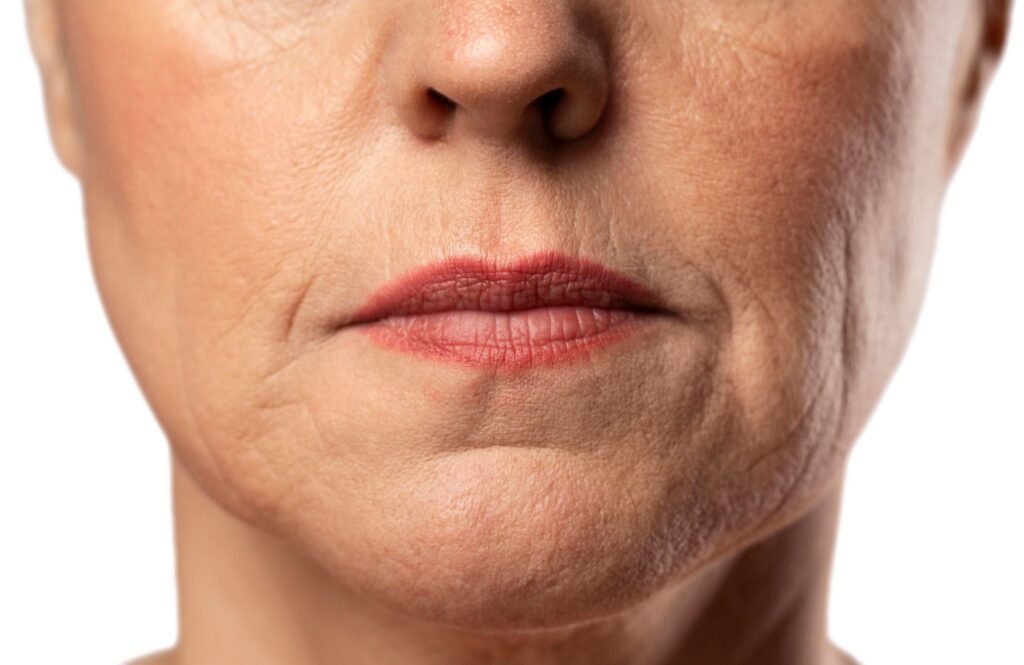
Sagging is primarily caused by the gradual weakening of structural support within the skin and underlying tissues. Over time, collagen loss combined with the effects of gravity leads to a downward shift in facial tissues, resulting in visible changes to facial contours. Individuals with this ageing pattern often notice skin laxity, drooping, and a loss of firmness, with the face appearing less defined or slightly descended.
These changes typically become more noticeable from the late 30s onwards, although the onset and severity can vary depending on genetics and lifestyle factors. Common signs include:
- Drooping cheeks and formation of jowls
- Loss of jawline definition
- Skin laxity around the neck
- Lowered brows or eyelid heaviness
Volume Loss & Hollowing
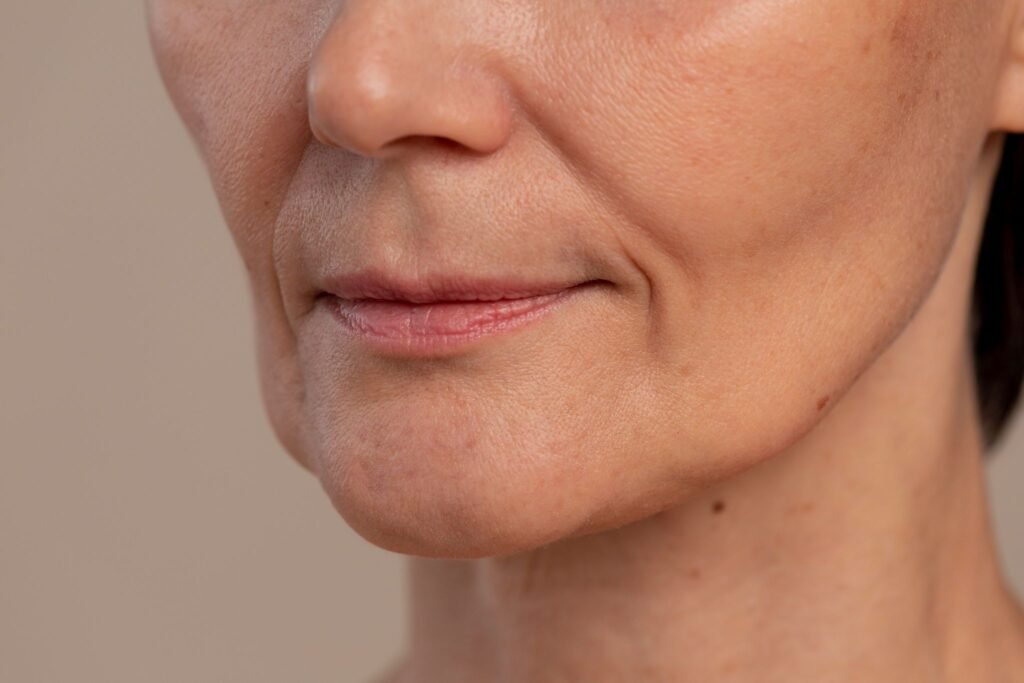
Volume loss occurs when facial fat pads gradually diminish and shift, reducing the natural fullness and structural support of the face. As volume decreases, individuals may notice a hollowed or deflated appearance, with the face appearing less lifted and more contoured by shadows. This can create a tired or sunken look, even when skin firmness is relatively preserved.
This type of ageing can develop earlier than expected, particularly in individuals with naturally lean facial structures or lower baseline facial volume. Common signs include:
- Hollow under-eye areas (tear troughs)
- Sunken cheeks or temples
- Flattening or deflation of the mid-face
- More pronounced nasolabial folds
- Thinning of the lips
Fine Lines, Wrinkles & Skin Texture Changes
Wrinklers experience ageing primarily at the skin surface level, where changes in skin quality become more noticeable over time. A decline in collagen, elastin, and natural hydration leads to the formation of fine lines, wrinkles, and uneven skin texture. Environmental factors, particularly sun exposure, can further accelerate these changes.
Individuals with this ageing pattern often notice early signs of ageing at a younger age, even before significant sagging or volume loss occurs. Common signs include:
- Fine lines around the eyes (crow’s feet)
- Forehead lines and frown lines
- Enlarged pores and uneven skin texture
- Dull, rough, or dehydrated skin
Treatments for Sagging Skin and Loss of Firmness
Doctors may consider several evidence-informed treatment categories for individuals primarily concerned about reduced skin firmness, definition, and structural support. Each works through a different mechanism and may be suitable for varying degrees of skin laxity. A qualified doctor will assess to determine the most appropriate approach based on individual needs.
High-Intensity Focused Ultrasound (HIFU)
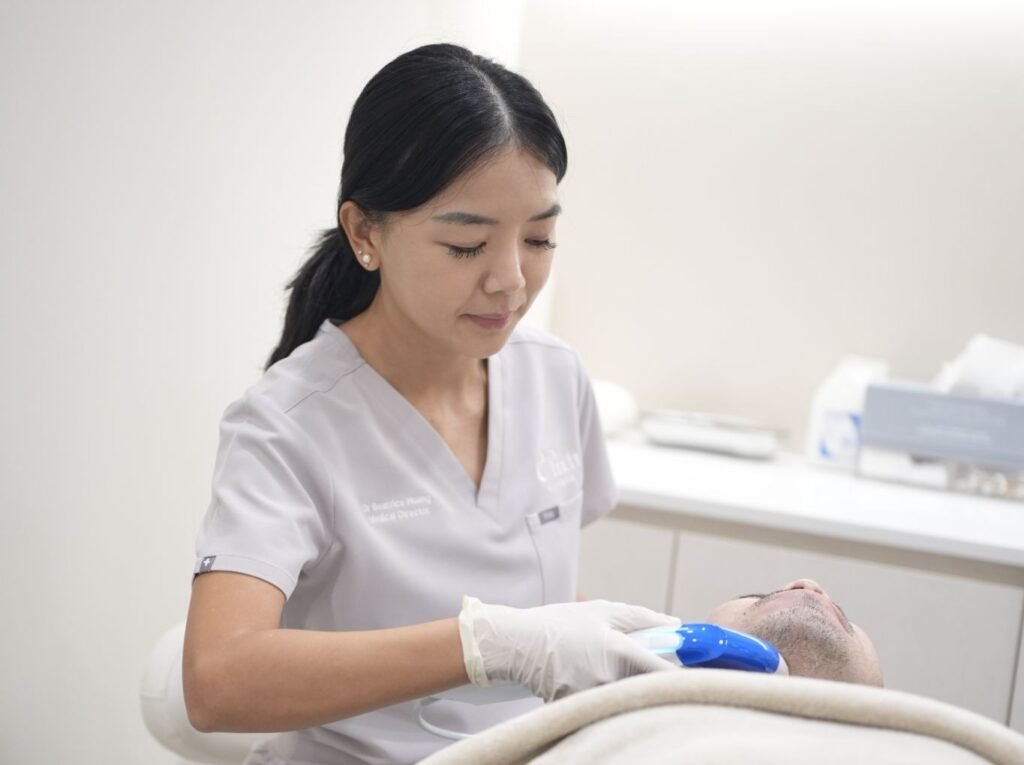
HIFU is an energy-based and non-invasive treatment. High-intensity focused ultrasound technology delivers targeted ultrasound energy to deeper structural layers of the skin, including the superficial musculoaponeurotic system (SMAS). This process supports the body’s natural collagen production and gradual skin tightening over time.
- Considered for mild to moderate skin laxity. Suitability depends on skin laxity, facial anatomy, and medical history, which should be assessed by a doctor
- Common treatment areas include the cheeks, jawline, lower face, and neck
- Collagen remodelling occurs gradually, with improvements typically developing over several weeks to months
- The number of sessions required varies depending on the individual’s skin condition and treatment goals
RF Microneedling Treatment
This is a minimally invasive, energy-based treatment. Potenza RF microneedling combines microneedling with radiofrequency energy to deliver controlled heat into deeper layers of the skin through fine needles. This process may stimulate collagen and elastin production while supporting improvements in skin firmness and texture. Potenza RF Microneedling can also be used for the treatment of hyperpigmentation (such a melasma) and vascular (such as rosacea and post-acne redness) concerns.
- Considered for mild skin laxity, enlarged pores, and uneven skin texture
- Can also support improvements in acne scars and overall skin rejuvenation
- Can play a role in the treatment of melasma, rosacea and acne prone skin
- A series of sessions may be recommended depending on individual concerns, as collagen remodelling and skin improvements develop gradually over time.
- Suitability depends on individual skin condition and treatment objectives
Collagen-Stimulating Injectable Treatments
Collagen-stimulating injectable treatments support gradual collagen remodelling within the skin and deeper soft tissue layers to improve skin firmness, elasticity, hydration, and overall skin quality over time. Doctors may recommend different injectable options depending on the individual’s degree of volume loss, skin laxity, and treatment goals. These treatments may be considered for:
- Age-related collagen loss
- Skin thinning and reduced elasticity
- Mild to moderate facial volume loss
- Reduced skin firmness and support
- Overall facial rejuvenation
At elixir clinic, treatment approaches may include collagen-stimulating injectables such as:
- Polynucleotide-based skin rejuvenation treatments
- Hyaluronic acid skin boosters
- PDLLA collagen-stimulating treatments
- Bioremodelling injectable treatments
Combination Skin Rejuvenation Treatment
As many individuals may experience multiple overlapping concerns, skin rejuvenation treatments may incorporate a combination of treatment modalities to address them. Combination approaches may involve laser-based treatments together with collagen-stimulating technologies to support improvements in skin texture, clarity, and firmness.
- Considered for individuals with multiple skin concerns, including mild laxity, pigmentation, and uneven texture
- Can support collagen and elastin remodelling within the skin
- Treatment plans are customised based on individual concerns, with multiple sessions often recommended for gradual improvement.
- Suitability should be assessed by a qualified doctor based on individual needs
Treatments for Volume Loss & Hollow Areas
Treatments for volume loss aim to restore facial balance and support rather than alter natural features. Outcomes can vary between individuals, and a personalised treatment plan is important to ensure appropriate and proportionate results. A consultation with a qualified doctor allows for a detailed assessment and discussion of potential benefits, risks, and expected outcomes.
Dermal Fillers for Facial Volume Restoration
Doctors use dermal fillers to restore volume, improve facial contour, and address areas of hollowing. In clinical practice, doctors commonly use hyaluronic acid-based fillers because hyaluronic acid naturally exists within the skin. Depending on individual clinical considerations, doctors may also use other filler types in selected situations.
- Common treatment areas may include the cheeks, temples, under-eye areas, nasolabial folds, jawline, and chin
- Hyaluronic acid-based fillers can be dissolved using an enzyme if required, which may be considered in certain clinical situations
- Effects are typically noticeable after treatment, although mild swelling may occur and usually settles within one to two weeks
- The duration of effect varies depending on the type of filler used, treatment area, and individual factors
- As with all medical procedures, there are potential risks and side effects, and treatment should be performed by a qualified medical professional
Biostimulatory Injectables for Collagen Stimulation (Skin Booster)
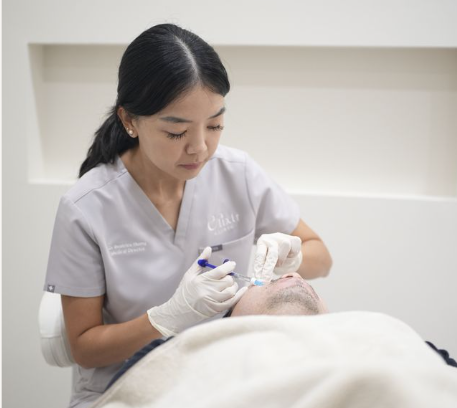
Biostimulatory injectables are treatments designed to stimulate the body’s natural collagen production. We combine hydrating ingredients such as hyaluronic acid (HA) with collagen-stimulating compounds like Poly D, L-lactic acid (PDLLA) to provide both immediate skin hydration and gradual structural support over time. By encouraging gradual collagen formation, these treatments may help improve skin thickness and provide subtle volume support over time.
- Considered for early or generalised volume loss, skin laxity, and ageing-related skin quality concerns
- Results develop progressively over several weeks to months as collagen stimulation occurs over time
- Typically delivered as a series of treatment sessions, depending on individual concerns and treatment goals
- As with all injectable procedures, there are potential risks and side effects, and treatment should be performed by a qualified medical professional
Energy-Based Treatments for Collagen Support
Certain energy-based treatments use technologies such as ultrasound or radiofrequency to stimulate collagen production in deeper layers of the skin. While primarily used for skin tightening, these treatments may also provide indirect support for areas affected by mild volume loss.
- Do not directly replace lost volume
- May help improve skin firmness and overall structural support
- Results develop progressively over time rather than immediately
- Multiple sessions may be recommended depending on the device and individual concerns
- Suitability should be assessed by a qualified medical professional
Treatments for Fine Lines, Wrinkles, and Skin Texture
In addition to structural changes such as sagging and volume loss, the surface quality of the skin also evolves over time. Ageing commonly causes concerns such as fine lines, wrinkles, uneven pigmentation, enlarged pores, and changes in skin texture. Doctors may recommend a range of clinically available treatments to address these skin-level changes depending on the individual’s skin condition and treatment goals.
BTX
Doctors use BTX, a prescription-only injectable medication, to temporarily relax targeted facial muscles. By reducing repetitive muscle activity, the treatment may help soften the appearance of dynamic wrinkles formed through facial expressions such as frowning, squinting, or raising the eyebrows.
- Common treatment areas may include the forehead, frown lines (glabellar area), crow’s feet, and brow region
- Effects are typically observed within a few days and may last several months, depending on individual factors
- More suitable for dynamic wrinkles, with treatment suitability and approach determined following a detailed facial assessment by a qualified medical professional.
Laser Treatments
Laser treatments use targeted light energy to address various skin concerns, including pigmentation irregularities, fine lines, acne scars, and uneven texture. The choice of laser type and settings depends on the individual’s skin condition and clinical indication. It also helps improve skin tone, texture, and overall skin clarity
- Ablative lasers remove controlled layers of skin to stimulate regeneration and may involve a recovery period, such as the Fractional CO2 Laser.
- Non-ablative lasers target deeper layers of the skin while minimising disruption to the surface, generally resulting in less downtime, such as Picosure Pro Laser, Potenza RF Microneedling, and HIFU Ultraformer MPT.
- Suitability varies based on skin type and risk factors; caution is required in individuals with a higher risk of pigmentation changes
Skin Boosters and Polynucleotide Treatments
Skin boosters and polynucleotide-based treatments are injectable therapies aimed at improving overall skin quality rather than providing structural lift or volume. These treatments focus on enhancing hydration, elasticity, and the skin’s natural repair processes.
- Hyaluronic acid-based skin boosters are delivered into the dermis to improve hydration and skin texture
- Polynucleotide treatments may support tissue repair and collagen production
- May be used alone or in combination with other treatments as part of a broader approach
- Suitability depends on individual skin condition and should be assessed by a qualified medical professional
Which Treatments are Suitable for Your Face Ageing Type?
Most individuals experience a combination of sagging, volume loss, and skin texture changes rather than a single concern. Choosing the right treatment begins with a proper assessment of your facial ageing pattern. A consultation typically evaluates factors such as skin quality, facial volume, structural support, and overall balance to determine what may be appropriate for your needs.
Based on these findings, doctors may recommend a personalised treatment plan that combines different approaches to address multiple layers of facial ageing in a balanced way. For example, doctors may improve skin quality while supporting facial structure and refining facial contours where needed. Instead of relying on a single procedure, doctors often combine treatments to achieve more proportionate, natural-looking results that align with the individual’s facial features.