
Dark eye circles are one of the most common aesthetic concerns among both men and women in Singapore. The under-eye area can easily appear darker, hollow, puffy, or tired due to factors such as ageing, genetics, lifestyle habits, pigmentation, volume loss, or poor circulation. Even with sufficient rest and a consistent skincare routine, dark eye circles may persist because the underlying causes are often structural rather than purely surface-level.
Many individuals notice that dark eye circles can make them appear fatigued, stressed, or older than they actually are. While concealers and eye creams may temporarily improve the appearance of the under-eye area, they may not address the root causes contributing to the condition.
This guide explores the common types and causes of dark eye circles, along with treatment approaches to improve the under-eye area and overall eye appearance.
Table Of Contents
- What Are Dark Eye Circles?
- The Difference Between Dark Eye Circles, Eye Bags, and Puffy Eyes
- Types of Dark Eye Circles
- What Causes Dark Eye Circles?
- Dark Eye Circle Treatment Options
- Improve Dark Eye Circles with Treatment Options at elixir clinic
What Are Dark Eye Circles?
Dark eye circles refer to the darkened appearance of the skin beneath the eyes, which can make the under-eye area appear tired, dull, or aged. The discolouration may appear brown, blue, purple, grey, or black, depending on an individual’s skin tone and the underlying cause.
In many cases, dark eye circles may coexist with other under-eye concerns such as wrinkles, eye bags, puffiness, hollowing, or skin laxity, which can further contribute to a fatigued appearance. Understanding the differences between these concerns is important because each may require a different treatment approach.
The Difference Between Dark Eye Circles, Eye Bags, and Puffy Eyes
Although these concerns are often grouped together, dark eye circles, eye bags, and puffy eyes are not the same condition.
Eye Bags
Eye bags refer to visible bulging or fullness beneath the eyes caused by protruding fat pads, fluid retention, or weakening tissues around the lower eyelids. They often become more noticeable with age as the skin and supporting structures around the eyes gradually lose firmness.
Eye bags may create shadows beneath the eyes, which can make dark circles appear more prominent even when pigmentation is not the main issue.
Puffy Eyes
Puffy eyes describe temporary swelling around the eyes that is commonly related to fluid retention or inflammation. Unlike structural eye bags, puffiness is usually transient and may fluctuate throughout the day.
Common triggers may include lack of sleep, allergies, crying, stress, dehydration, or high salt intake. In many cases, puffy eyes may improve with lifestyle adjustments, although persistent swelling may sometimes require further assessment depending on the underlying cause.
Types of Dark Eye Circles
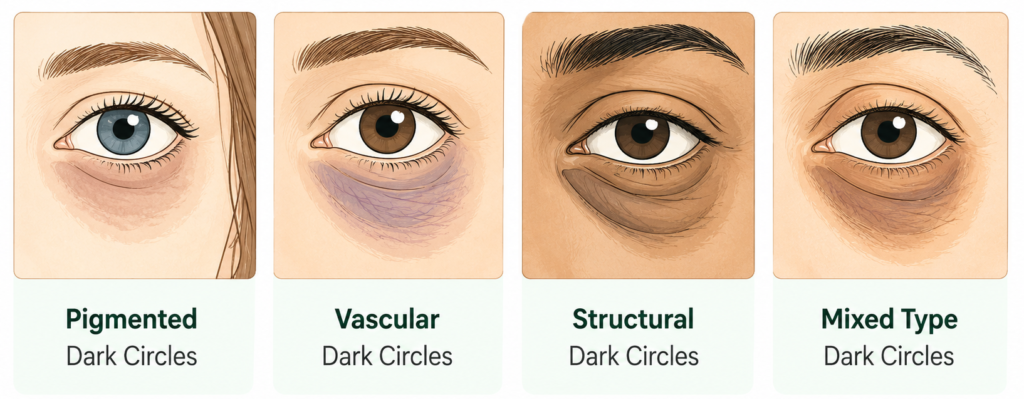
Dark eye circles are often not caused by a single factor. In many individuals, the appearance of under-eye darkness may result from a combination of pigmentation, visible blood vessels, volume loss, skin thinning, or shadowing beneath the eyes. Identifying the underlying type of dark circle is important because different causes often require different treatment approaches. The most common types of dark eye circles include:
Pigmented Dark Eye Circles
Pigmented dark eye circles are caused by increased melanin production beneath the eyes, leading to brown or darker discolouration in the under-eye area. This type is commonly caused by genetics, sun exposure, chronic rubbing of the eyes, eczema, or post-inflammatory pigmentation. Common characteristics may include:
- Brown or darkened under-eye pigmentation
- More noticeable with sun exposure
- Often associated with genetic or hereditary factors
- May coexist with dry or sensitive skin around the eyes
Vascular Dark Eye Circles
Vascular dark eye circles occur when blood vessels beneath the thin under-eye skin become more visible, creating a bluish, purplish, or reddish appearance. Because the skin around the eyes is naturally thinner and more delicate, visible circulation beneath the skin may become more prominent in certain individuals. Factors such as fatigue, poor sleep, stress, allergies, or thinning skin with ageing may make vascular dark circles appear more noticeable. Common characteristics may include:
- Blue, purple, pink, or reddish under-eye tones
- More visible in individuals with thinner skin
- May appear worse with fatigue or poor sleep
- Often associated with visible under-eye veins or skin translucency
Structural Dark Eye Circles
Structural dark eye circles are caused by hollowing, volume loss, or shadowing beneath the eyes. As volume decreases in the tear trough or mid-face area, shadows may form under certain lighting conditions, creating the appearance of dark circles. Structural dark circles are commonly associated with ageing, genetics, or natural facial anatomy. Common characteristics may include:
- Hollow or sunken under-eye appearance
- Shadows that become more noticeable under lighting
- Tear trough deformities or volume loss
- Dark appearance that may persist despite adequate rest
Mixed Dark Eye Circles
In many individuals, dark eye circles are multifactorial, meaning more than one cause may be present at the same time. For example, an individual may experience a combination of pigmentation, thin skin, visible blood vessels, and structural hollowing simultaneously. Because of this, treatment often requires a personalised approach based on the underlying contributing factors rather than a one-size-fits-all solution.
What Causes Dark Eye Circles?
Dark eye circles can develop due to a combination of genetic, lifestyle, and environmental factors. Because the under-eye area has thinner and more delicate skin compared to other parts of the face, changes beneath the skin surface can become more noticeable. Depending on the underlying cause, dark circles may appear brown, bluish, purplish, or shadowed in appearance.
Hyperpigmentation
Excess melanin production can lead to darker pigmentation around the eyes, resulting in brownish dark circles. This may be influenced by genetics, excessive sun exposure, inflammation, hormonal changes, or frequent rubbing of the eyes. Pigmented dark circles are often more common in individuals with darker skin tones.
Lack of Sleep and Fatigue
Poor sleep quality or insufficient rest can contribute to dull-looking skin and more visible dark circles. Fatigue may cause blood vessels under the eyes to dilate, making the area appear darker or puffier. Dehydration and prolonged stress can further worsen the appearance of tired eyes.
Ageing and Volume Loss
As we age, collagen and elastin levels naturally decline, causing the skin to become thinner and less firm. Volume loss around the eyes may create hollowing or shadows, making dark circles appear deeper and more prominent over time.
Lifestyle Factors
Certain lifestyle habits can contribute to the development of dark eye circles. Smoking, excessive alcohol consumption, dehydration, stress, and poor nutrition may affect blood circulation and overall skin health, causing the under-eye area to appear dull or tired.
Genetics and Family History
Genetics can play a significant role in the appearance of dark eye circles. Some individuals may naturally have deeper tear troughs, thinner under-eye skin, or increased pigmentation due to inherited traits. In these cases, dark circles may develop regardless of lifestyle or skincare habits.
Allergies and Nasal Congestion
Conditions such as allergies or nasal congestion can cause inflammation and increased blood flow around the eyes, leading to puffiness and darker shadows. Frequent rubbing or scratching due to irritation may also worsen pigmentation in the delicate under-eye area.
Sun Exposure
Excessive sun exposure can stimulate melanin production, causing pigmentation around the eyes to become darker and more noticeable. Without adequate sun protection, existing dark circles may gradually worsen over time.
Dark Eye Circle Treatment Options
Dark eye circles can develop from different underlying causes, including pigmentation, volume loss, visible blood vessels, and skin thinning. Because of this, treatment is often tailored based on the type and severity of the dark circles present. At elixir clinic, a range of non-surgical aesthetic treatments may be recommended to help improve the appearance of the under-eye area by targeting pigmentation, skin quality, hydration, and structural concerns.
Laser Treatments
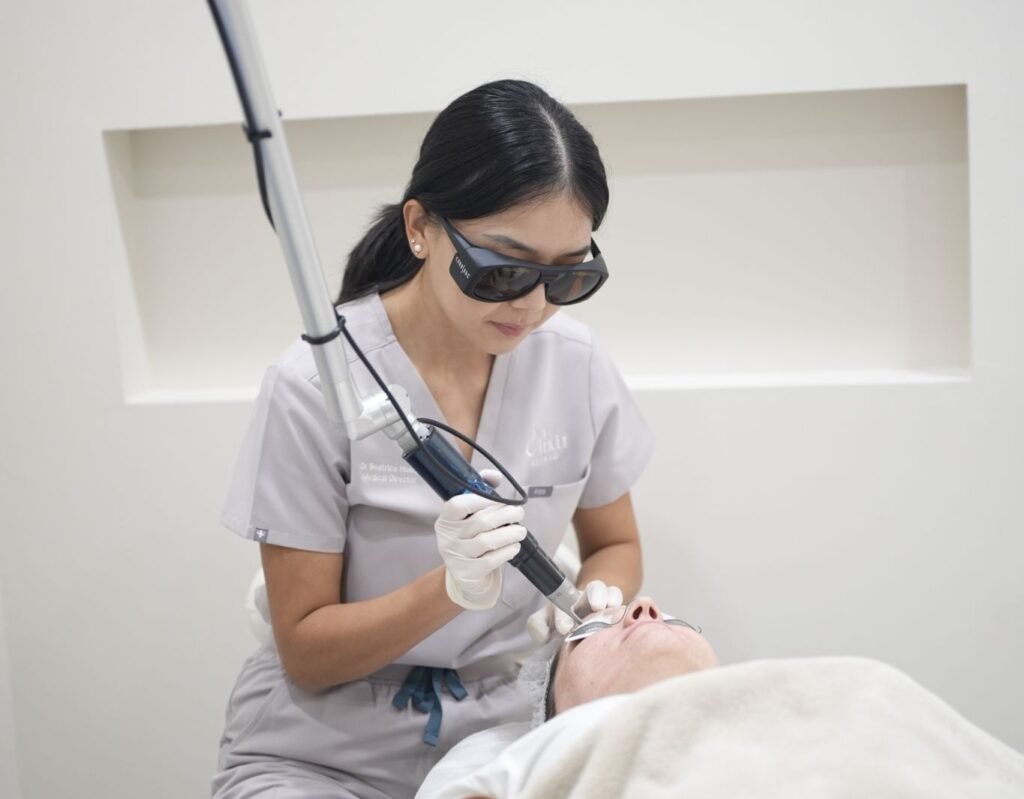
Laser treatments such as Pico laser may help improve dark eye circles caused by pigmentation and uneven skin tone. These treatments work by delivering controlled laser energy into the skin to target excess pigment while stimulating collagen production beneath the surface.
By encouraging skin renewal and improving overall skin texture, laser treatments may help the under-eye area appear brighter, smoother, and more refreshed over time. Collagen stimulation can also support firmer and healthier-looking skin around the eyes.
Skin Boosters for Hydration and Skin Quality
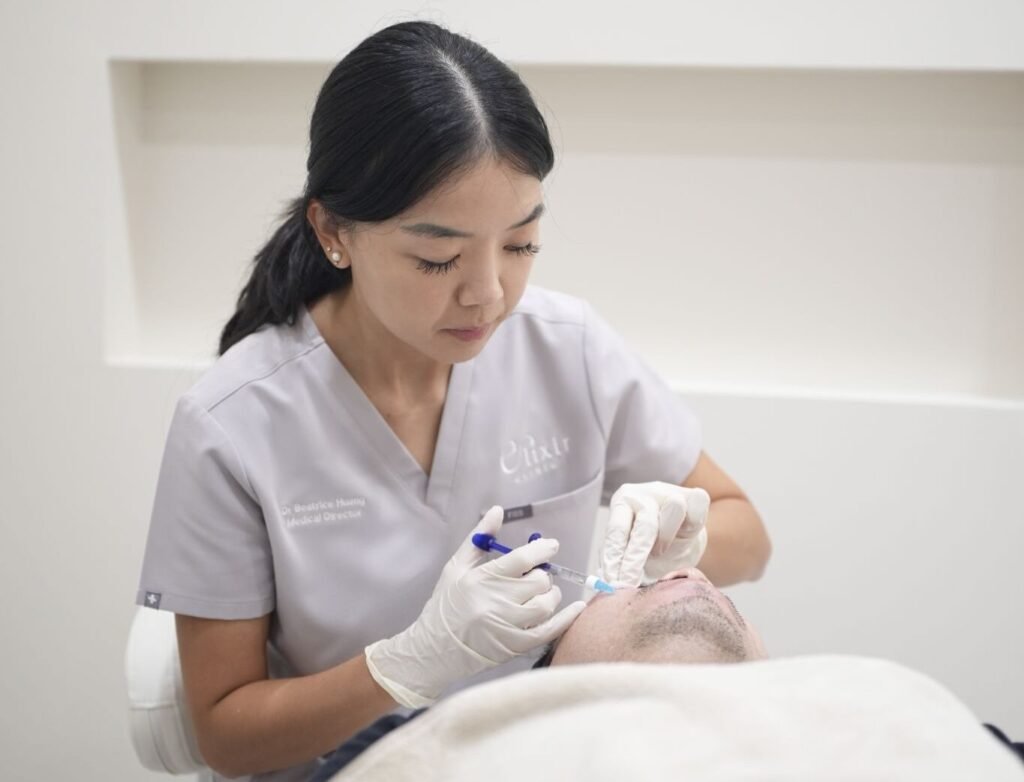
Skin booster treatments typically use injectable ingredients such as poly-D-L-lactic acid (PDLLA), polynucleotides (e.g. salmon/trout DNA) or hyaluronic acid to improve hydration and overall skin quality in the delicate under-eye area. By increasing moisture levels within the skin and stimulating collagen production, skin boosters may help improve fine lines, dullness, and crepey-looking skin beneath the eyes.
This treatment is often suitable for individuals with tired-looking eyes caused by dehydration or early skin ageing, helping the under-eye area appear smoother and more revitalised.
Hyaluronic Acid Fillers
For individuals with hollow tear troughs or volume loss beneath the eyes, hyaluronic acid fillers may be used to restore volume and soften shadowing that contributes to dark circles. Carefully placed filler can help smooth the transition between the lower eyelid and cheek area, creating a brighter and less sunken appearance.
Certain formulations may also contain ingredients designed to improve skin quality and support a more radiant under-eye appearance alongside volume restoration.
Radiofrequency (RF) Microneedling
RF Microneedling is a treatment that combines ultra-fine microneedles with radiofrequency energy to rejuvenate the delicate under-eye area. This treatment helps stimulate collagen and elastin production beneath the skin surface, supporting firmer, smoother, and healthier-looking skin around the eyes.
For individuals with dark eye circles related to skin thinning, mild puffiness, fine lines, or early skin laxity, Potenza RF microneedling may help improve overall under-eye skin quality and reduce the tired-looking appearance. The controlled RF energy is delivered precisely into targeted skin layers, encouraging skin remodelling while minimising damage to the surrounding tissue.
Improve Dark Eye Circles with Treatment Options at elixir clinic
Dark eye circles can develop from multiple underlying causes, and many individuals experience a combination of concerns at the same time. Each type of dark eye circle affects the under-eye area differently, selecting the most suitable treatment often begins with a proper skin assessment. A personalised treatment approach can help target the specific causes of dark eye circles more effectively, while supporting overall under-eye rejuvenation and skin quality improvement.
During a consultation, factors such as skin quality, pigmentation, volume loss, and under-eye structure. Overall eye appearance is also evaluated to determine which treatment approaches are suitable for your concerns. In some cases, combination treatments may also be recommended to address different contributing factors more comprehensively.